The Sourdough Revolution: Crafting Your Perfect Loaf at Home
As we find ourselves spending more time at home than ever before during these difficult and unprecedented times, many of us have turned to the kitchen for solace and creativity. Among the myriad culinary pursuits that have captured our collective imagination, social media leaves us with absolutely no doubt that sourdough baking is standing out as a true favourite amongst many of us. This ancient bread-making technique has experienced a remarkable resurgence, with home bakers across the UK and indeed globally embracing the art of crafting their own sourdough loaves.
Why Sourdough?
Sourdough bread isn’t just another passing fad in the food and drink world. Its popularity stems from a combination of factors:
- Simplicity: At its core, sourdough requires just three ingredients – flour, water and salt.
- Health benefits: Many find sourdough easier to digest than commercial yeasted breads.
- Taste: The complex flavours developed during fermentation are unmatched.
- Sustainability: By creating your own starter, you’re reducing reliance on commercial yeast.
Starting Your Sourdough Journey
Creating Your Starter
The heart of any sourdough loaf is its starter – a fermented mixture of flour and water that captures wild yeast and beneficial bacteria. Here’s how to create your own:
- Mix equal parts flour and water in a jar.
- Leave it at room temperature for 24 hours.
- Discard half and feed with equal parts flour and water.
- Repeat this process daily until your starter doubles in size and smells pleasantly sour.
This process typically takes 5-7 days. Be patient – your sourdough starter is a living thing and it needs time to develop.
Maintaining Your Starter
Once your starter is active you’ll need to feed it regularly. If you’re baking frequently, keep it at room temperature and feed it daily. If you’re an occasional baker, store it in the fridge and feed it weekly.
Baking Your First Loaf
With your starter ready, it’s time to bake your first loaf. Here’s a simple recipe to get you started:
Ingredients:
- 300g active sourdough starter
- 700g strong bread flour
- 300g water
- 10g salt
Method:
- Mix all ingredients until no dry flour remains.
- Let the dough rest for 30 minutes.
- Stretch and fold the dough every 30 minutes for 2-3 hours.
- Shape the dough and place it in a proving basket.
- Refrigerate overnight.
- The next day, preheat your oven to 240°C with a Dutch oven inside.
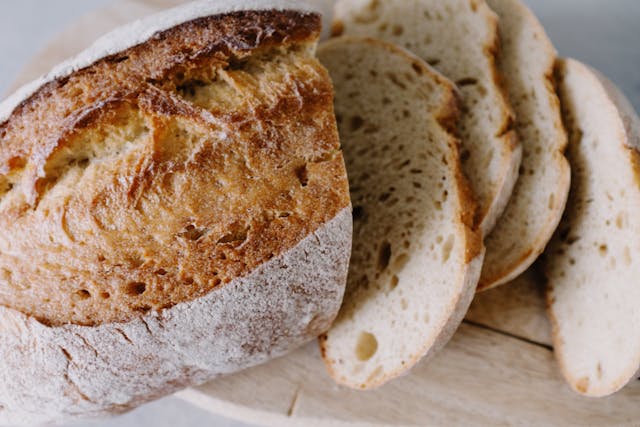
- Score your dough and bake for 30 minutes with the lid on, then 15-20 minutes with the lid off.
Overcoming Challenges
Baking for One
If you’re living alone, the thought of baking a full-sized loaf might seem daunting. Here are some tips:
- Scale down your recipe to make smaller loaves.
- Slice and freeze your bread to enjoy it over time.
- Share with neighbours (while maintaining social distancing, of course).
Baking with Children
Involving children in sourdough baking can be a wonderful learning experience. However, safety is paramount:
- Let children help with mixing and kneading, but handle hot ovens yourself.
- Use this opportunity to teach about patience and the science of fermentation.
- Create fun shapes with the dough to keep them engaged.
Troubleshooting Common Issues
Even experienced bakers encounter challenges with sourdough. Here are some common problems and solutions:
- Starter not rising: Your environment might be too cold. Try finding a warmer spot or using slightly warmer water.
- Dense loaf: This could be due to underproofing. Give your dough more time to rise before baking.
- Overly sour taste: Your starter might be too acidic. Try feeding it more frequently.
- Difficulty scoring: Ensure your dough is properly chilled and use a very sharp blade.
Beyond Basic Bread
Once you’ve mastered the basic sourdough loaf, why not experiment? Try incorporating different flours, adding seeds or nuts or even using your starter in other recipes like pancakes or pizza dough.
The world of sourdough is vast and exciting. Each loaf is unique, reflecting the environment it was created in and the hands that shaped it. As you continue on your sourdough journey, you’ll develop your own techniques and preferences.
In these challenging times, the simple act of creating something nourishing with our own hands can be incredibly comforting. So flour up your worktop, roll up your sleeves and join the sourdough revolution. Your perfect loaf is waiting to be baked.