Accessible Travel: Tips for Booking Disabled Holidays Abroad
Planning disabled holidays abroad doesn’t have to be an uphill battle. In 2013, the European Commission awarded Berlin with the Access City award, demonstrating a growing commitment to barrier-free travel for those with physical or other disabilities.
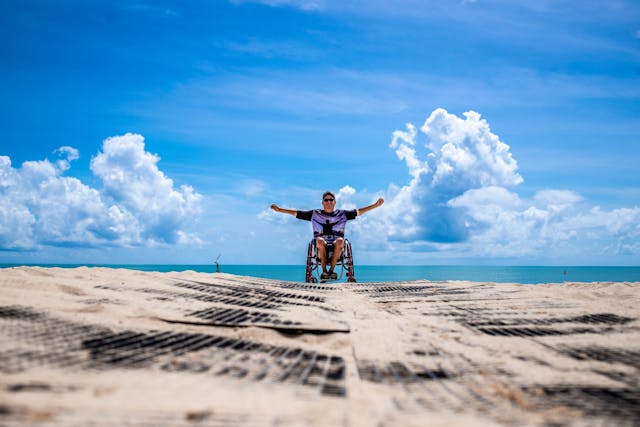
Despite growing awareness, many holiday destinations still lack suitable infrastructure for wheelchair users. Uneven pavements, steps without ramps and inaccessible hotel bathrooms are just some of the challenges disabled travellers may face. However, the travel industry is evolving. Recent years have seen considerable improvements in transport for passengers with limited mobility, especially at airports and train stations. Furthermore, destinations like Los Cristianos in Tenerife now offer wheelchair accessible holidays with features including ramps, floating beach wheelchairs and transfer lifts.
Nowadays, with the growing use of social media, many wheelchair users are rating and recommending places to stay and talking about accessible holidays abroad. Countries like Greece are leading the way in beach accessibility, with new nationwide rollouts of solar-powered, remote-controlled beach wheelchair-accessible tracks enabling direct access to the sea. Throughout this guide, we’ll share our top tips for disabled travellers and explore everything you need to know about planning, booking and enjoying a stress-free holiday that meets your accessibility requirements.
Understand Your Accessibility Needs
Before booking any travel, understanding your specific accessibility requirements is essential. Recent research reveals that almost half of European travellers with accessibility needs take at least one leisure trip abroad yearly, yet continue to face avoidable barriers. Gaining clarity about your needs is the first crucial step towards successful disabled holidays abroad.
Types of mobility challenges to consider
The range of accessibility needs is vast and often more complex than many realise. While wheelchair accessible holidays are commonly discussed, accessibility requirements extend far beyond wheelchair users alone.
Accessibility needs vary significantly based on:
- Physical mobility impairments – affecting movement and requiring adaptations like ramps, lifts and grab bars
- Sensory impairments – including vision or hearing difficulties that impact navigation and communication
- Hidden disabilities – such as autism, dementia or chronic conditions that may require specific accommodations
- Multiple impairments – many travellers have more than one condition requiring various accommodations
A common misconception is that disability is only about visible physical conditions. In reality, ‘disability’ encompasses both visible and non-visible conditions, including mental health conditions, neurodivergent conditions like dyslexia or autism and long-term health conditions such as diabetes or HIV/AIDS. Additionally, research shows one in four travellers or their companions travel with a health impairment, with hearing/vision impairment and mental health conditions being most prevalent.
Common barriers in disabled holidays abroad
For many, the barriers begin before even leaving home. Strikingly, 67% of people with accessibility needs or their families report that booking travel is a major barrier. This challenge often leads to missed opportunities – 77% of disabled people have avoided visiting venues because they couldn’t find adequate accessibility information.
Transport presents particularly significant obstacles. Over 80% of respondents in one study reported challenges with transport during their most recent trip. For air travellers, the top transport challenges include difficulty boarding/disembarking, extended wait times for mobility assistance (sometimes causing missed flights) and inadequate assistance at stations and airports.
Accommodation poses another set of challenges. Nearly half (47%) of people with accessibility needs avoided staying in hotels over a 12-month period due to poor accessibility. Moreover, 52% report that finding accommodation with adequate accessibility features is too difficult, while 54% believe hotels aren’t properly equipped for their needs.
Financial considerations also create barriers. More than 80% of travellers with accessibility needs report spending at least 10-30% of their total travel budget on accessibility-related expenses. Furthermore, 58% cite expensive accessible hotel rooms as a primary reason for not going on overseas holidays.
For disabled holidays abroad all inclusive options, these challenges compound, as 64% of respondents in one study indicated they might miss out on summer holidays due to accessibility concerns.
How to assess your personal travel requirements
Assessing your needs thoroughly is crucial for accessible holidays abroad. Begin by considering all parts of your journey – from departure through transit to your final destination. This comprehensive approach ensures you won’t encounter unexpected barriers.
First, evaluate your specific mobility challenges and how they might impact different aspects of travel. Those with physical coordination problems or difficulties with personal care appear most likely to face challenges using public transport or walking for short journeys.
Next, consider practical requirements for each travel stage:
- For flights and airports, determine what assistance you’ll need during check-in, moving around the terminal, boarding and disembarking. Remember that 51% of travellers with accessibility needs cite long airport delays as their main concern when travelling abroad. You’re legally entitled to special assistance, free of charge, when flying from UK airports on any airline or to UK airports on UK or EU airlines.
- For accommodation, verify if there is step-free access to main areas, suitable bedroom and bathroom facilities, and appropriate door widths. Be specific in your assessment – check if doors open outwards or inwards, bathroom size and availability of roll-in showers or grab-bars.
- For ground transportation at your destination, research accessibility options in advance. Note that the Blue Badge Scheme operates throughout the European Union, although accessible vehicles may not always be available.
When researching wheelchair friendly holidays, don’t rely solely on general accessibility statements. Instead, look for detailed information about specific features. Most holiday-makers think about accommodation features rather than disability categories – they want to know exactly what’s available rather than general assurances.
Lastly, assess additional support needs, such as whether you require a travel companion. Services like Trusted Travel Buddies, Wheelchair Travel and Holiday Care Companions can match you with appropriate travel assistants. Additionally, factor in potential additional costs, including carer expenses, specialist medical insurance and extra seating costs on transport.
By thoroughly understanding your personal requirements before booking, you’ll significantly increase your chances of enjoying successful disabled friendly holidays abroad.
Choose Disability-Friendly Destinations
Selecting the right destination can make all the difference for your accessible holiday experience. After identifying your specific needs, the next crucial step is finding locations that can accommodate them. Fortunately, many places worldwide are recognising the importance of inclusive tourism, with some destinations leading the way in accessibility innovation.
Top wheelchair accessible holidays abroad
Sweden ranks among the world’s most wheelchair accessible holidays destinations, renowned for its comprehensive accessibility measures. Cities like Stockholm are often chosen as a popular holiday for disabled people as they have invested significantly in accessible transportation and public spaces, ensuring a welcoming atmosphere for wheelchair users. The country consistently receives praise for its accessible hotels and tourist attractions, along with convenient features like accessible swimming pools and wheelchair accessible bus services.
Germany likewise excels in this area, making it one of the best disabled holidays abroad. Berlin received the European Commission’s Access City award in 2013, demonstrating their commitment to barrier-free travel. The city features tactile pavements, ramps and accessible public transportation throughout, ensuring people with disabilities can navigate with ease.
For those seeking sunshine, Tenerife offers exceptional accessibility with 14 accessible beaches along its coastline. Furthermore, the Spanish resort of Hotel Vulcano in Tenerife boasts year-round sunshine and has become one of the most popular destinations with disabled and non-disabled tourists alike.
Greece has emerged as a leader in beach accessibility. The country recently announced a €15 million investment in solar-powered, remote-controlled beach wheelchair-accessible tracks enabling wheelchair users direct access to swim in the sea. This remarkable commitment to inclusive tourism makes Greece a standout choice for disabled holidays abroad.
What makes a destination truly accessible
True accessibility extends far beyond ramps and roll-in showers. According to wheelchair users, emotional aspects of travel significantly impact the experience. One traveller notes, “It’s not just about ramps and lifts, though those things matter. It’s about how a place makes you feel. Do you belong there? Can you relax? Will you be safe, welcomed and free to explore?”
Staff behaviour, local culture and wider social attitudes all influence how welcome disabled travellers feel. Being addressed directly, treated with respect and acknowledged without pity creates an environment where disabled visitors feel valued rather than tolerated.
Physically, destinations become truly accessible through thoughtful design features. The most accessible locations offer:
- Comprehensive transportation networks with accessible options
- Clear signage and information for people with various disabilities
- Accommodations with specific accessibility features, not just generic claims
- Staff trained in disability awareness
- Accessible recreational activities and tourist attractions
Consistency throughout the entire travel experience remains essential. Even places with excellent accessible transportation can fall short if restaurants, attractions and accommodations lack accessibility features.
Examples of popular holiday spots for disabled people
The Canary Islands consistently rank among the best accessible holidays abroad options. Los Cristianos in southern Tenerife offers an accessible beach with ramps, floating beach wheelchairs, a transfer lift and large wood-covered areas with sunbeds. Visitors can additionally enjoy wheelchair-accessible dolphin and whale cruises, gaze at stars in Teide National Park or take guided tours of the La Orotava Banana Plantation.
Lanzarote’s Nautilus Lanzarote Resort begins its marketing with “Nautilus Lanzarote is committed to promoting Accessible Tourism,” signalling their dedication to inclusive travel. Similarly, Spain’s Sunset Beach Club in Benalmádena, Costa del Sol, is recognised as part of the “backbone of inclusive resort holidays”.
Portugal offers outstanding accessible options as well. The Algarve region features Centre Algarve, set in an idyllic nature reserve and fully equipped for accessibility. This resort provides a multi-sensory soft-play room, fully accessible swimming pool with hoist, sensory gardens and a petting zoo – all while maintaining an intimate atmosphere with just 14 bedrooms.
For city breaks, Amsterdam stands out despite its reputation for narrow streets. The city offers remarkable accessibility with wheelchair accessible taxis, the flat neighbourhood of Belem containing fascinating landmarks and monuments, plus an accessible public transportation system with lifts connecting lower and upper parts of the city.
Outside Europe, Florida remains a premier destination for wheelchair friendly holidays, widely acknowledged as the go-to state for accessibility. Other exceptional options include California, which is regarded as one of the best American states for wheelchair access and offers direct flights from Dublin via Aer Lingus.
For something truly unique, consider South Africa’s Klaserie Nature Reserve, described as “the World’s First Wheelchair Accessible Safari”. Australia likewise offers distinctive options such as the Byron Bay Rainforest Resort, originally established in 1987 as the Wheel Resort, specifically designed for people with mobility issues or disabilities.
When researching disabled holidays abroad all inclusive, you may wish to consider Malta’s DB Seabank Resort, which promotes its services with “Put your mind to rest and enjoy an all-inclusive stay that caters to your needs in our accessible rooms”. This exemplifies how all-inclusive options can provide comprehensive care alongside accessibility.
Ultimately, the perfect accessible destination depends on your specific requirements, preferred climate and desired activities. The growing network of accessible service providers worldwide means your holiday options expand every year, with quality, safety and accessibility standards continuously improving.
Book with Specialist Travel Providers
Booking through specialist providers can make the difference between a stressful experience and a truly enjoyable holiday. The complexities involved in arranging disabled holidays abroad often require expertise that mainstream travel agencies simply don’t possess. Fortunately, a growing number of specialist companies now offer comprehensive services tailored to travellers with accessibility requirements.
Best travel companies for accessible holidays abroad
Several UK-based specialist travel companies have established themselves as leaders in providing accessible holidays:
DisabledHolidays.com stands out as the UK’s largest accessible holiday specialist, helping thousands of families, couples and groups travel confidently each year. Their offerings include everything from accessible all-inclusive resorts to adapted caravans, cruises and cottages. Importantly, all their package holidays come with ABTA and ATOL protection, giving you peace of mind when booking.
Limitless Travel brings qualified carers on every trip, allowing travellers with disabilities to explore with confidence. They’ve crafted thousands of supported group trips, ranging from coach tours in Devon to more ambitious adventures like paragliding in Tenerife and safaris in Kenya.
Enable Holidays creates tailor-made overseas holidays specifically for wheelchair users and people with limited mobility. They offer over 500 audited hotels, villas, tours and safaris with a 10% discount for Motability Scheme customers. Each property is personally checked for accessibility features prior to being added to their portfolio.
For travellers with visual impairments, Traveleyes offers unique shared holidays pairing visually impaired and sighted travellers for a sensory-rich experience. Likewise, Lets-Go Supported Holidays specialises in trips for adults with mild to moderate learning disabilities, providing 24-hour support.
Wheel the World takes a different approach, focusing on gathering comprehensive accessibility information through their Mappers Programme, which compiles over 200 data points for each listing. This level of detail ensures you know exactly what accessibility features will be available.
What to ask before booking
Prior to finalising any booking, asking the right questions can prevent disappointing experiences. One of the most important things to do when booking is to ask detailed questions, particularly if you have specific requirements that must be in place.
Consider asking specialist providers these essential questions:
- What specific accessibility features are available in the accommodation? (Ask about door width, bed height, bathroom accessibility and roll-in shower)
- How will I get from the airport to accommodation? Is an accessible transfer vehicle guaranteed?
- What documentation do you provide confirming the accessibility arrangements?
- Are staff at the destination trained in disability awareness?
- What assistance is available during the journey and at the destination?
- Do you arrange equipment hire at the destination if needed?
It’s useful to mentally map your journey from leaving home to arriving at your destination, considering all potential challenges along the way. Subsequently, do a similar exercise for your daily routine while away. This approach helps you identify all your requirements before booking.
Given these points, it’s advisable to get all your requests documented on the booking form and confirmed back to you in writing. This ensures everyone is clear about what you need and provides protection should arrangements not meet expectations.
Benefits of using accessible holiday specialists
The advantages of booking accessible holidays abroad through specialist providers extend far beyond convenience.
First and foremost, these specialists understand the unique challenges faced by disabled travellers. Unlike mainstream travel agencies, they have extensive experience in arranging wheelchair friendly holidays and can provide tailored recommendations based on your specific needs.
Verified accessibility information represents another crucial benefit. Rather than vague assurances about ‘accessibility,’ specialists like DisabledHolidays.com verify critical details with suppliers before you book. This prevents the all-too-common scenario of arriving at a supposedly accessible hotel only to discover it doesn’t meet your requirements.
Personalised support throughout your booking journey and during your holiday provides additional peace of mind. Travel experts familiar with disability travel know how to ensure you receive the accessible room you need and can help avoid barriers that might otherwise ruin your holiday.
Booking through specialists often saves considerable time and energy. Many disabled travellers report spending hours researching accessibility information, calling hotels to verify details, only to arrive and find something isn’t right despite all their efforts. A good specialist handles these logistics, allowing you to focus on enjoying your trip.
Financial protection represents yet another advantage. Companies like DisabledHolidays.com offer ABTA and ATOL protection on package holidays, safeguarding your investment should anything go wrong.
The specialist knowledge extends to understanding the financial aspects of your holiday. With more than 80% of travellers with accessibility needs spending at least 10-30% of their total travel budget on accessibility-related expenses, specialists can help you manage costs effectively.
Finally, specialist providers often maintain relationships with hotels, transfer companies and activity providers who have demonstrated commitment to accessibility. This network of trusted partners ensures consistent quality across all aspects of your holiday experience.
Given that almost 14 million disabled people live in the UK, with the spending power of disabled people – ‘the purple pound’ – valued at almost £250 billion, travel providers specialising in accessible holidays are increasingly recognising both the social importance and business sense of catering to this market. Consequently, the range and quality of disabled friendly holidays abroad continue to improve each year.
Check Accommodation Accessibility Features
Securing suitable accommodation lies at the heart of successful disabled holidays abroad. Even with the perfect destination and travel provider, your holiday experience ultimately depends on finding accommodation that meets your specific accessibility requirements. Research shows that 47% of people with accessibility needs avoid staying in hotels due to poor accessibility, highlighting the importance of thorough accommodation research.
Essential features in accessible all-inclusive hotels
The best accessible all-inclusive hotels offer more than just basic compliance with accessibility standards. They provide thoughtful design elements that enhance comfort and independence for all guests.
A properly designed accessible room should include:
- A roll-in shower with proper drainage and a handheld showerhead with a long hose
- Accessible doors with automatic openers or without heavy closers/spring hinges
- Ample floor space for wheelchair manoeuvring in all areas
- Adjustable bed height or a bed at reasonable transfer height (17-23 inches from floor to top of mattress)
- Visual and tactile accessibility features like flashing light alarms and braille signage
- Accessible power outlets and controls at reachable heights (15-48 inches)
- Ground floor location or reliable lift access
Critically, floating vanities with knee clearance for wheelchair users can make or break bathroom accessibility. Likewise, many hotels market rooms as “accessible” despite featuring bathtubs with plastic seats rather than true roll-in showers, a crucial distinction for many travellers.
The quality of accessible rooms varies enormously between hotels. Properties with genuinely inclusive design focus on spacious layouts with minimal furniture, hardwood floors rather than carpets and a buzzer/light system for hearing impaired guests.
How to verify hotel accessibility before booking
For wheelchair accessible holidays abroad, verification is essential. Unfortunately, hotels rarely post photographs of accessible rooms on their website, necessitating direct communication.
To verify hotel accessibility effectively:
- Contact the hotel directly rather than through reservation hotlines
- Ask specific questions about your particular requirements
- Request photographs of accessible rooms, especially bathrooms and showers
- Get written confirmation of all accessibility features
- Check access to all areas, including restaurants, pools and recreational facilities
When speaking with hotel staff, be persistent in requesting photos. Explain that you have “a very complex disability” and need pictures to determine if you can safely stay in the room. If staff initially refuse, ask them to consult a supervisor.
Clearly explain your specific needs regarding door widths, bed height, bathroom layout and any equipment you might require. For holidays for people with mobility issues, verify whether doors open outwards or inwards, bathroom dimensions and availability of grab bars.
Additionally, check if nearby amenities are accessible. The Changing Places International website offers an interactive map of specialised toilet facilities around the globe, which can be invaluable for planning daily activities.
Tips for booking disabled friendly holidays abroad
When booking disabled friendly holidays abroad, several strategic approaches can improve your chances of finding truly suitable accommodation.
Firstly, book as early as possible. Accessible rooms are typically limited in number and highly sought after, particularly on cruise ships where accessible cabins are often booked 6-12 months in advance.
Next, prioritise factual descriptions over disability categories. Research indicates that disabled travellers want information about specific features rather than generalised ratings based on impairment types. As one interviewee aptly stated: “Don’t tell me what I want, tell me what you have and I’ll make my decision”.
For wheelchair accessible holidays abroad, make a comprehensive list of your needs regarding access, sleeping and toilet facilities. This might include a ground floor room, wide doorways, a wheel-in shower and storage space for mobility equipment.
Consider negotiating discounts for inaccessible amenities. If certain facilities included in your package aren’t accessible to you, contact the hotel to discuss potential price adjustments.
Before finalising any booking for disabled holidays abroad, ensure all your requirements are documented on the booking form and confirmed in writing. This provides protection should arrangements not meet expectations upon arrival.
Notably, hotels meeting at least six of nine specific accessibility criteria qualify as genuinely accessible. These criteria include accessible parking, a reception area with induction loops, ground-floor bedrooms or suitable lifts, adjustable bed heights, level bathrooms with roll-in showers and sufficient clear signage.
Nevertheless, keep in mind that accessibility is highly individual. What works perfectly for another disabled traveller may not work for you, hence the importance of personally verifying all details before booking.
Plan for Transport and Insurance
Transport and insurance represent crucial practical considerations for disabled holidays abroad. Getting these elements right ensures a smoother journey and proper protection throughout your trip. Research shows approximately 40% of the population are considered people with reduced mobility, including those with disabilities, elderly individuals and parents with young children.
Accessible airport transfers and public transport
Securing appropriate airport transfers demands advance planning. In most destinations, accessible taxis are limited or non-existent at general taxi ranks, making pre-booked transfers essential.
When arranging wheelchair accessible holidays transfers, provide these key details:
- Total number of travellers
- Number of wheelchair or mobility scooter users (with dimensions)
- Flight information and scheduled arrival time
- Luggage requirements (including outsized items like hoists)
Book transfers several days in advance, as same-day arrangements are typically impossible. Prices vary based on country, city, vehicle type and journey length, with early morning or late night arrivals often incurring surcharges.
For public transport abroad, accessibility standards differ dramatically between countries. Austria, for instance, has set itself the goal of achieving a leading position regarding accessibility in transport compared to other countries. Nonetheless, even in countries with strong accessibility commitments, barriers remain common.
Travel insurance for disabled people
Travel insurance is absolutely essential for everyone, and especially for people with additional needs. Disability travel insurance policies cover medical costs, equipment and cancellations, offering crucial support if you become ill or injured during your trip.
Always purchase insurance immediately after booking your trip so you’re covered in case anything happens before departure. In fact, the Foreign, Commonwealth & Development Office strongly recommends all travellers with disabilities take out comprehensive travel insurance.
When obtaining quotes, you must disclose all pre-existing conditions. Insurers may ask about:
- Prescription medication
- Mobility equipment used
- Recent hospital admissions
- Ongoing treatments
- Upcoming medical appointments
Be completely honest during this process. Failing to disclose conditions could invalidate your policy if you later need to make a claim. Furthermore, pay close attention to the excess amount – the maximum you’ll need to pay toward any claim.
Several specialist providers offer travel insurance for disabled people, including AllClear Insurance and Fish Insurance. These companies often provide better understanding of specific conditions and more competitive pricing. When comparing disability travel insurance, make sure you take into account the different levels of cover available to ensure you choose the right policy for your needs.
Flying with mobility aids and wheelchairs
According to European law, all passengers with disabilities can receive assistance when flying, free of charge. At all airports within the UK and EU, you’re entitled to help at arrival points, during check-in, moving through the airport and boarding the plane.
Notify your airline at least 48 hours before departure about any assistance needs. For electric wheelchair users, advance notification is particularly crucial – you must provide complete details including battery information to ensure safe loading and storage.
You can bring up to two mobility items free of charge, which won’t count toward your baggage allowance. Nonetheless, your wheelchair cannot be taken into the passenger cabin but must be stored in the hold.
Before flying with mobility equipment:
- Check airline restrictions (rules vary between carriers)
- Provide detailed specifications when booking
- Bring the operating manual to assist airline staff
- Attach disassembly instructions to power chairs
Be aware that while airlines are liable for damage to mobility equipment, compensation is often limited to approximately £1,300. Consider additional insurance for valuable items. If damage occurs, airports must provide temporary replacement equipment, though it may not match your specifications.
By addressing these transport and insurance considerations thoroughly, your holidays abroad can proceed with fewer complications and better protection against unexpected situations.
What a Great Holiday Should Feel Like
After all the planning and practical arrangements, the ultimate goal of disabled holidays abroad remains simple: experiencing true freedom and enjoyment. The feeling of stepping into unfamiliar surroundings, breathing different air and connecting with new cultures transcends ordinary experience.
For many with disabilities, a great holiday fundamentally differs from merely accessible accommodation. Recent studies reveal that accessibility factors across public areas, recreation spaces, bathrooms, dining facilities and accommodation directly predict satisfaction levels for people with physical disabilities. Indeed, location with good public transport connections ranks as the most important accommodation criterion for disabled travellers (rated 3.60 out of 4), followed by additional services included in the price (3.50) and overall cost (3.46).
Beyond logistics, truly exceptional wheelchair friendly holidays create emotional freedom. As one disabled traveller described Barcelona: “When I first acquired my chronic illness, I never would have believed I’d find myself swimming in the sea with my friends again one day”. Such moments represent the genuine essence of successful travelling when disabled.
The availability of specialised facilities creates these transformative experiences. South Africa’s Ximuwu Safari Lodge exemplifies this approach as “one of the world’s first wheelchair-accessible luxury safari lodges” with adapted safari vehicles, roll-in showers and pool hoists. Correspondingly, holidays for people with mobility issues should enable trying new activities without accessibility concerns.
Disabled travellers typically value certain experiences highly. Research indicates the most important aspects include accessibility of facilities (rated 3.16 out of 4), tasting regional cuisine (3.10) and visiting cultural attractions (3.00). These elements combine to create what one traveller described as “freedom… possibility… a vital reset and a shift in perspective”.
Ultimately, these accessible holiday ideas should enable everyone to experience what makes travel so valuable – the opportunity to broaden perspectives, deepen empathy and experience the world’s diversity. When planning your next trip, remember that the true measure of success is returning home feeling refreshed, accomplished and enriched by new experiences.